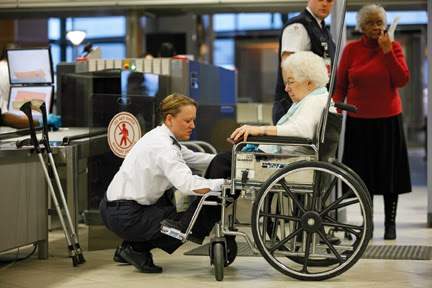
It’s now November and the Holiday Season is just around the corner. Like many families, you may be planning on traveling for Thanksgiving or Christmas this year and your family trip might include traveling with an aging parent or other family member. Or maybe your loved one is travelling to visit other family for the Holidays in another part of the country.
 They may not be as mobile without a wheelchair, or maybe they have a specific health condition such as Alzheimer’s disease or heart problems. You might be required to take the lead, not only as a guide, but also as the caregiver. This may make your vacation much more complex, regardless of whether you’re traveling by plane, train or your own family car.
To assist, we’ve compiled some tips from our Travel Companion Program that will help make the most out of your next family trip.
Before you head out, consult with your family member’s primary care doctor for travel approval. Your loved one needs to be cleared for travel by his or her primary care doctor, especially if you’re accommodating a health condition such as Alzheimer’s disease. Make sure the chosen destination is appropriate to any potential limitations, and ask the doctor for specific travel tips, as well as any necessary vaccinations or extra medications.
Arrange special services ahead of time. If your loved one needs a wheelchair at the airport, advance boarding of the airplane or train, or special seating in a disabled row or near a restroom, get in touch with the airline personnel or travel company to make sure these are available prior to arrival. Remember the TSA security checkpoints too: be aware of any surgical implants that might set off metal detectors, and wear easy-to-remove shoes. Contact the airline in advance to arrange for special screening if your loved one has disabilities or special needs, and contact hotels to check on things like shower bars and handicapped accessible rooms.
Research medical facilities at your destination. Make sure you know where the nearest hospitals and care centers are, in case of emergency. Bring contact details for your own doctors, too, and any necessary insurance information.
Organize all necessary documentation and identification. Have your travel documentation in order: passports, if needed, as well as driver’s license, travel tickets and itineraries—and make multiple copies. Pack medical documentation: Medicare and insurance cards (and photocopies) should be in your carry on, not checked baggage, as well as any prescriptions or physician’s statements.
Make it easy to keep in contact. If you are not travelling with them, make sure to provide your loved one with a calling card or a prepaid cell phone, if they don’t already have one. This is an ideal way to make sure they can get in touch with you at all times. Program all important phone numbers into the cell phone ahead of time.
Pack essentials in a travel bag that is easily accessible. Keep the essentials close at hand: an ample supply of necessary medication, important documents and phone numbers, favorite snacks or drinks, a deck of cards or other entertainment, a light sweater, a hat, sunscreen and a travel pillow. These should be kept in a carry-on bag, or a tote that’s readily available inside the car rather than locked away in the trunk.
Pack light. As the caregiver, less is more. By traveling light you will have less to juggle and can give more attention and focus on your loved one. After all, you don’t want to throw your back out, particularly when someone is depending on you!
Plan for breaks and downtime in the schedule. There’s nothing less relaxing during a vacation than having to rush from place to place, and quiet time is even more important if you’re a caregiver to your travel mate.
If you have any questions or would like any additional information, we at FirstLight Home Care — South Sound are happy to help. Just give us a call at 360-489-1621.
Happy and safe Holiday travels!
 Home Care Services
 Home Care Jobs