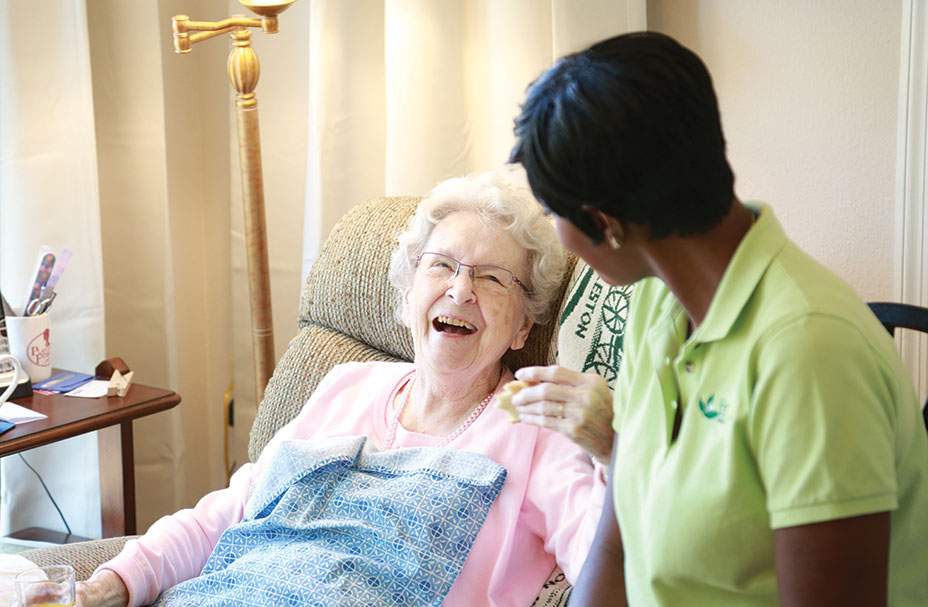
The month of December often includes many wonderful family functions to spend time together and reconnect. As your family gathers at “home” over the holidays, you might also want to take the opportunity to quietly assess how things are going for your aging parents or other close family members. It is also the ideal occasion for you and your siblings to make these assessments together. What should you be looking for? Fundamentally, you want to make sure your aging loved ones can remain living safe and healthy at home on their own. Here are a few areas to pay attention...
Home
Care
Living with Alzheimer's and Dementia
A family member being diagnosed with dementia often creates shock and anxiety within the rest of the family. The biggest issue about "what will happen next?" is will the diagnosis also mean moving. The strong desire of most adults diagnosed with this disease is to remain independent and living in their own homes for as long as possible. But to achieve this goal, some changes will most likely need to be made, both to enable people with dementia to remain independent, as well as make it easier for others to give support. Below are some recommendations made by the Alzheimer's Association: General Safety Improvements: As people get older,...
Supreme Court Maintains New Protections for Home Care Workers
We at FirstLight Home Care – South Sound enthusiastically applaud the decision made earlier this month by the U.S. Supreme Court that will deliver minimum wage and overtime pay protections to home care workers. In September 2013, the U.S. Department of Labor issued a new rule that extended the Fair Labor Standards Act’s (FLSA) minimum and overtime wage protections to home care workers (i.e. home care aides and certified nursing assistants). This “final rule” replaced an exemption enacted in 1974 that allowed many home care employers to deny caregivers minimum wage and overtime pay. At the request of some in...
Learn More about Supreme Court Maintains New Protections for Home Care Workers
Keeping You and Your Bones Strong
Although we often think of bones as hard and fully formed at a certain age, they are actually living, growing tissue that needs to be maintained. Osteoporosis is a disease of the bones that results in bone loss. More than 10 million Americans suffer from Osteoporosis and about 34 million more are at risk for the disease. Estimates suggest that about half of all women older than 50, and almost one-in-four men, will break a bone because of Osteoporosis. How Do You Know If You Have Osteoporosis? Osteoporosis is often referred to as the “silent disease” because you could have...
FirstLight Named “Certified Trusted Provider”
FOR IMMEDIATE RELEASE July 29, 2015 (Olympia, WA) – FirstLight Home Care, a leading provider of in-home care for seniors in the South Sound including Olympia, Rainier, Lacy and surrounding areas, announced today it has been distinguished as a Certified – Trusted Provider from Home Care Pulse, the premiere quality management company in the home care industry. “This award is an independent validation of our commitment to client satisfaction and quality care,” said Sarah Lane, Owner of FirstLight Home Care – South Sound. ”At FirstLight, our focus is on our clients and their families, ensuring the people we serve can continue to...
Learn More about FirstLight Named “Certified Trusted Provider”
When visiting with potential clients during our free in-home consultation, we often find many common misconceptions about home care and what the experience entails. For many, home care is a blessing, a secure way for parents to remain living independently in the home. Others are, naturally, nervous about letting strangers into their home to care for their loved ones. Below are the six most some common myths about home care – and the realities: Myth #1: Homecare is only for the sick or infirm. Reality: Most families employ FirstLight caregivers to provide personal care or companion care for their aging parents, even though they are not ill. Instead,...
Family Caregiving from Long Distance
Caregiving from a distance is no easy task. It can be stressful because you can’t be there at a moment’s notice when your parents need you. To help reduce some of the stress and to help you organize the process for care when your loved ones do not live near you, follow some of these helpful tips: Create a Contact List: Assemble and organize a contact list that includes addresses, phone numbers and emails of friends, neighbors, doctors, faith leaders and others in regular contact with your parents who you can be reached in the event of an emergency. Next...
Ready to get started?