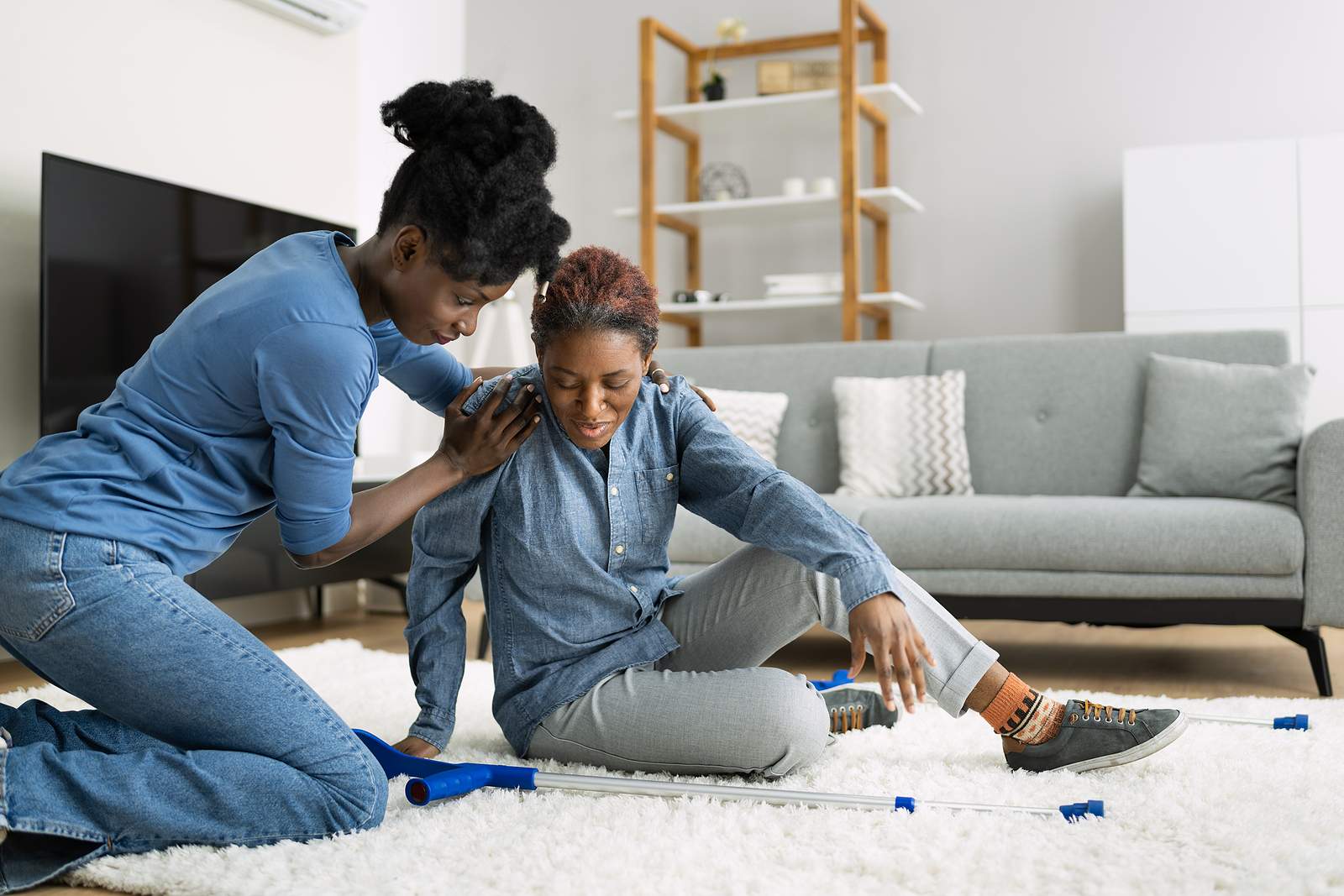
If your senior parent is living alone and you’re worried about them falling at home, personal care at home is a great way to help keep them safe. Personal care at home is specialized care for seniors who are living alone.
The caregivers who provide personal care at home for seniors are trained to help seniors with difficult physical tasks that could be dangerous for them. Tasks like showering, getting dressed, and especially getting in and out of bed safely.
If your parent has had a previous fall and they have limited mobility, personal care at home can help prevent them from falling again. And it can help seniors who can’t move their own bodyweight, or have trouble moving an arm or their legs, get up each day or get into bed at the end of each day safely.
If family members who aren’t trained try to help seniors with physical movement it can end up with both family members and seniors getting hurt. It’s best to get professional help from people who have training and experience helping seniors of different abilities move safely.
Some of the Transfer Techniques That Can Keep Your Parent Safe
The care providers who specialize in helping seniors with transferring in and out bed or in and out of chairs learn how to use different techniques and equipment to keep your safe. Some of the methods they may use to prevent your parent from getting hurt or falling are:
Stand-By Assistance
If your parent is still able to stand and walk independently but needs someone nearby for safety, a home care provider may use stand-by assistance.
With this method, the provider stays close while your parent moves from the bed to a chair or from sitting to standing. The provider doesn’t physically lift or support your parent’s weight unless it’s necessary to prevent a fall. Stand-by assistance gives your parent confidence while allowing them to remain as independent as possible. It is often appropriate for seniors who have mild balance problems or who tire easily but can still perform the transfer on their own.
Assisted Standing Transfer
Some seniors can bear weight on their legs but need physical assistance to stand up. During an assisted standing transfer, the home care provider helps your parent rise from a chair or bed using proper body mechanics and safe positioning.
The provider may offer support at your parent’s waist or use a gait belt if one has been recommended by your parent’s healthcare provider. Once your parent is standing steadily, the provider helps them turn and safely sit in the new location.
This type of transfer is commonly used for seniors who have enough leg strength to participate but need extra support for balance and stability.
Pivot Transfer
A pivot transfer is often used when your parent can stand briefly but cannot safely walk several steps. After helping your parent stand, the home care provider carefully assists them in turning, or pivoting, toward a nearby chair, wheelchair, bedside commode, or bed. Your parent bears as much weight as they safely can while the provider offers support throughout the movement. Because the distance is short, pivot transfers can reduce the amount of walking required while still encouraging your parent to use the strength they have.
Sit-to-Stand Lift
If your parent has difficulty standing but can still bear some weight on their legs, a sit-to-stand lift may be recommended. This mechanical device gently helps lift your parent from a seated position into a standing position while providing secure support throughout the transfer. The home care provider operates the equipment according to the manufacturer’s instructions and your parent’s care plan. Sit-to-stand lifts reduce physical strain on both your parent and the caregiver while allowing your parent to remain actively involved in the transfer.
Full-Body Mechanical Lift
When your parent cannot safely support their own weight, a full-body mechanical lift may be necessary. This type of lift uses a supportive sling that is placed beneath your parent. The lift then raises and transfers them safely from the bed to a chair, wheelchair, or another surface without requiring your parent to stand.
A full-body mechanical lift helps protect your parent from falls while reducing the risk of injury to caregivers from manual lifting. Because this equipment requires specialized training, it should only be used by caregivers who have been properly instructed in its safe operation and according to your parent’s individualized care plan.
If you or an aging loved one are considering personal care at home in Greenwood Village, CO please contact the caring staff at FirstLight Home Care of Central Denver today at (303) 953-9575
FirstLight Home Care of Central Denver provides exceptional home care for seniors in Denver, Littleton, Westminster, Wheat Ridge, Arvada, Lakewood, Golden, Centennial, Greenwood
Village, Aurora and surrounding areas.
 Home Care Services
 Home Care Jobs