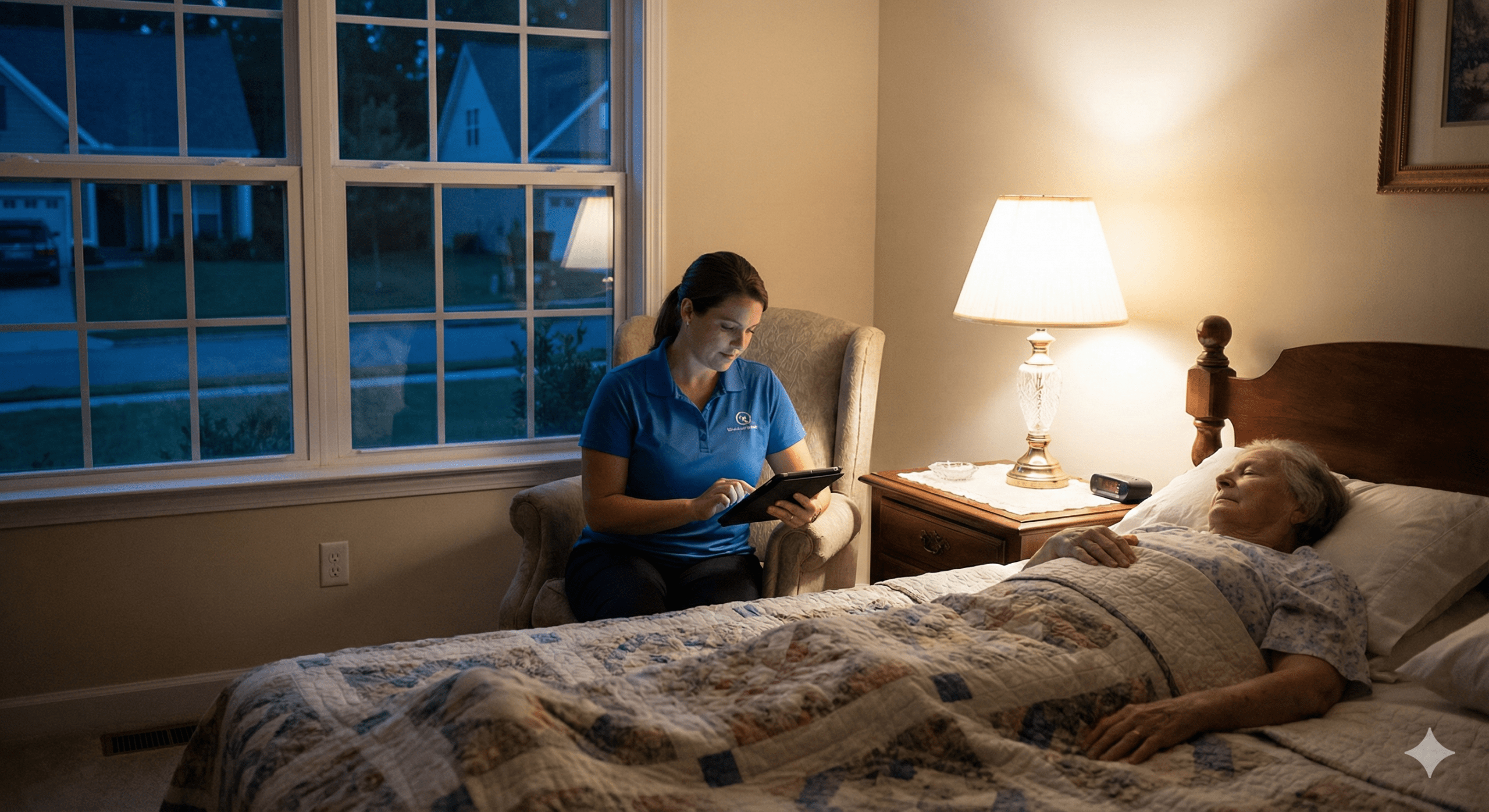
There is nothing more unsettling than waiting for a late‑night phone call. When your mom or dad is living alone and you live miles away, every unexpected ring can make your heart race. You might already have a visiting caregiver coming a few hours a day, but chronic health conditions, frequent falls or late‑night confusion have made those intermittent visits feel insufficient. For some families in Wake County, the risk of a middle‑of‑the‑night emergency has grown too high. That is when 24 hour home care Wake County becomes more than a consideration — it becomes a pathway to peace of mind.
Unlike ordinary home visits, 24‑hour care ensures that a caregiver is always present with your loved one, day and night. This level of support is often recommended for seniors with chronic illness, those recovering from major surgery or living with significant mobility challenges. Individuals facing advanced Alzheimer’s or dementia, patients with a high fall risk, and people at the end of life also benefit from this level of vigilance. It isn’t about removing independence; it’s about providing safe oversight when aging makes unsupervised living unsafe.
Families often worry that they will have to move Mom or Dad to a facility to receive this level of supervision. Fortunately, professional home care agencies offer a solution that keeps seniors in their own homes and still provides continuous monitoring. By scheduling two caregivers to work 12‑hour shifts or three caregivers on rotating eight‑hour shifts, agencies keep caregivers awake and alert so there is always someone ready to respond, no matter the hour. This approach avoids the gaps that occur when a live‑in caregiver goes to bed, and it gives you the comfort of knowing there is immediate assistance in case of a fall, confusion, pain flare‑up or other emergency.
Living in familiar surroundings helps ease anxiety, maintain routines, and reduce the risk of depression. Seniors who remain at home can still see the same neighbors, hear birds chirping in their own back yard, and enjoy memories attached to their house, which helps them feel grounded. Continuous support also prevents risky behaviors like climbing onto step stools, wandering outside, or forgetting to turn off the stove. Later in this guide you’ll learn how 24‑hour schedules work, who benefits most from this service, and how choosing a local Wake County agency offers advantages over national providers.
When Independent Living Becomes Unsafe
Many older adults can live safely with periodic help. But certain conditions make intermittent visits inadequate. If any of the following sound familiar, it may be time to consider 24‑hour care:
- Frequent falls or mobility issues – Falls are one of the leading causes of injury among seniors. Difficulty walking, relying on furniture for balance, or recent falls suggest that being alone is no longer safe. Constant supervision helps prevent accidents and ensures quick assistance if they occur.
- Changes in personal hygiene – Wearing the same clothes for days, skipping bathing or grooming can indicate physical limitations, depression or cognitive decline. A round‑the‑clock caregiver ensures your loved one stays clean, comfortable and dignified.
- Cognitive decline or memory loss – Consistent confusion, repetitive questioning or disorientation, especially at night, increases the risk of wandering or forgetting to turn off appliances. Continuous monitoring provides safety, medication reminders and calm reassurance.
- Poor nutrition or missed meals – An empty refrigerator, expired food or forgotten meals can lead to weight loss and dehydration. Caregivers ensure balanced meals and regular hydration.
- Increased medical needs or chronic conditions – Multiple medications, complex treatment routines or illnesses like diabetes, COPD or Parkinson’s require timely monitoring. A trained caregiver can manage daily health tasks and alert medical professionals if symptoms worsen.
- Social isolation or emotional withdrawal – Seniors who stop participating in hobbies, avoid phone calls or seem depressed may be experiencing loneliness. Companionship offered through 24‑hour care brings conversation, reassurance and emotional support.
These signs often appear gradually. Families may dismiss them as normal aging until something serious happens. However, experts urge families to act before a crisis occurs. The Hahn Home Health Care guide on 24‑hour care notes that warning signs include advanced dementia, recovery from surgery with high fall risk, chronic illness, severe mobility challenges and palliative/hospice needs. Addressing these needs early prevents hospitalizations, long‑term complications and the emotional trauma of rushed decision-making.
Living alone can also leave seniors isolated and anxious. Loneliness has been linked to increased blood pressure, heart disease and cognitive decline. A constant caregiver offers not only assistance but also companionship and conversation. For many Wake County families, the decision to transition to 24‑hour support is driven by the fear of the unknown: Will Mom remember to take her medicine? What if Dad falls and can’t reach the phone? With round‑the‑clock care, those questions are replaced with reassurance that help is always at hand.
How 24‑Hour Split Shifts Work
Home care agencies provide two main models for sustained assistance: live‑in care and 24‑hour care. Though often used interchangeably, they function differently and are appropriate for different needs.
Live‑in Care at a Glance
A live‑in caregiver stays in the client’s home for 24 hours at a time, often rotating with another caregiver every four or five days. The caregiver receives an eight‑hour sleeping break and an additional daytime break during each 24‑hour period. Families must provide a private bedroom for the caregiver, and there will be times when the senior is alone unless additional coverage is arranged. Live‑in care is billed at a flat rate and can be a cost‑effective option for individuals who require assistance but do not need constant supervision.
24‑Hour Care: Always Awake, Always Alert
By contrast, 24-hour care schedules two caregivers each day, working 12‑hour shifts, or sometimes three caregivers working eight-hour shifts. In this model there is no sleeping break; caregivers remain awake and vigilant throughout their shift. Since one caregiver can work a maximum of four 12-hour shifts per week, different team members rotate to cover the remaining visits. Families can decide whether caregivers may rest when the client sleeps; however, many choose non‑sleeping shifts to guarantee immediate response to any situation.
The main advantage of this arrangement is that someone is always there. Even in the middle of the night, a caregiver is prepared to assist with mobility, manage medications or address emergencies. Clients and families appreciate that caregivers remain fresh and alert, reducing the risk of mistakes due to fatigue. Because caregivers work shorter shifts, there is no expectation of providing room and board, though rates are billed hourly and may be higher than live‑in care.

Why Continuous Care Matters
Families often ask whether 24‑hour care is truly necessary. The answer depends on safety and health needs. If your parent needs help turning over in bed to avoid pressure sores, cannot stand without assistance, or has advanced dementia with wandering at night, a sleeping caregiver may not suffice. The 24‑hour model ensures someone is awake to respond immediately if your loved one attempts to leave the house, hears a noise or experiences pain. It also provides consistent medication management, personal care and nutrition. Additionally, this structure allows families to build a team of caregivers who understand their loved one’s routines and preferences, fostering trust and reducing anxiety.
Balancing Cost and Safety
It’s true that having multiple caregivers means higher hourly costs. But these costs must be weighed against the risks and potential expenses of falls, hospitalizations or prolonged nursing home stays. Many agencies can tailor the schedule, using 24‑hour shifts during acute periods (post‑surgery recovery or late‑stage dementia) and scaling back as conditions stabilise. You may also explore state and local programs, such as Medicaid waivers or support from the Area Agency on Aging, to help offset care expenses.
Our Approach to 24‑Hour Home Care Wake County
At FirstLight Home Care, we combine the continuity of 24-hour care with the personal attention that families in Cary, Apex and Raleigh expect from a local provider. We aren’t a distant franchise with a call center hundreds of miles away; we live and work in the same communities you do. Our office in Wake County is a stone’s throw from Bond Park, and many of our caregivers reside in Cary or nearby towns. That local presence means we can adapt quickly to changing needs, coordinate with WakeMed Cary or UNC Rex Hospital in Raleigh for emergency visits, and offer flexible scheduling. Working with a local agency offers benefits like a deeper understanding of community resources, smoother coordination with local medical providers and more responsiveness.
How We Staff 24‑Hour Shifts
Our scheduling team develops rotating shifts that prioritize both safety and caregiver consistency. We typically assign two caregivers per day: one for daytime and one for overnight. Each is trained in fall prevention, dementia care and emergency response. Because no two families are the same, we design personalised care plans that can include:
- Personal care assistance: Help with bathing, dressing, toileting and grooming to maintain dignity and hygiene.
- Meal preparation and nutrition management: Ensuring three nutritious meals a day, snacks and hydration.
- Medication management: Timely reminders and proper documentation to prevent missed doses or errors.
- Mobility assistance: Safe transfers, walking support and repositioning to prevent pressure sores.
- Companionship and mental stimulation: Engaging conversation, playing games, reading or listening to music to reduce isolation and maintain cognitive function.
- Transportation and errands: Getting to and from appointments, grocery shopping or church events.
- Coordination with medical providers: Updating care plans based on doctor recommendations and accompanying clients to appointments at WakeMed or Rex Hospital.
- Family updates: Regular communication with adult children to ensure transparency and peace of mind.
Who Benefits Most from 24‑Hour Care?
While any senior can enjoy the comfort of round‑the‑clock support, certain conditions make it particularly beneficial. Our team works with families across Cary, Apex, Morrisville, West Cary and Raleigh to provide 24‑hour care for clients who have:
- Advanced Alzheimer’s or dementia – Frequent wandering, confusion and nocturnal agitation make constant supervision essential.
- High fall risk or recent surgeries – Those recovering from hip fractures, cardiac procedures or other major surgeries may need help moving safely and sticking to discharge instructions.
- Chronic illness or severe mobility challenges – Conditions like Parkinson’s disease, multiple sclerosis, stroke after-effects or advanced arthritis require continuous assistance with eating, grooming and moving.
- Palliative or hospice needs – For families choosing end‑of‑life care at home, 24‑hour caregiving provides comfort and dignity in familiar surroundings.
- Cognitive or mental-health concerns – Seniors who experience sundowning, hallucinations, or severe anxiety at night need a calm presence to maintain safety and reassurance.
- Social isolation or emotional withdrawal – Continuous companionship helps prevent loneliness and stimulates conversation and engagement.
By partnering with a local agency, families can adjust the level of care as needs change. If Dad improves after rehabilitation or Mom’s memory stabilizes, we can transition to live‑in care or scheduled visits. Conversely, if a client’s condition worsens, our team can quickly add shifts and provide the specialized support needed.

Next Steps
Taking the leap to 24‑hour home care is a serious decision. It often follows months of worry and sleepless nights, but once you make the change, the relief is palpable. Imagine knowing there is always a trained professional ready to help your parent to the bathroom at 2 a.m., bring them a cup of tea at dawn, or notice subtle changes that warrant a call to the doctor. With round‑the‑clock care, you no longer have to brace yourself for that dreaded midnight phone call.
If you’re considering 24 hour home care in Wake County, our team at FirstLight Home Care is here to answer questions and guide you through the process. We pride ourselves on being servants of the community first, business owners second. We will visit your loved one’s home in Cary, Apex, Morrisville, West Cary or anywhere in Wake County for a no‑obligation assessment, learn about your concerns, and develop a plan that balances safety, independence and your budget. Our knowledge of local healthcare resources – from WakeMed Cary to Rex Hospital – means we can coordinate care seamlessly if an emergency arises.
You don’t have to move Dad to a facility to keep him safe. With our dedicated caregivers, you can maintain the familiarity and comfort of home while ensuring continuous support. Reach out today to schedule your free consultation and discover how 24‑hour home care can provide the peace of mind your family deserves.
 Home Care Services
 Home Care Jobs