Living with dementia can change the way a senior communicates, remembers information, and experiences the world around them. However, dementia does not take away a person’s need for purpose, connection, enjoyment, and meaningful daily experiences.
The right activities can help seniors with dementia stay engaged while providing opportunities for social interaction, movement, creativity, and emotional connection. Activities do not need to be complicated. In many cases, familiar and enjoyable activities are the most meaningful.
Why Activities Are Important for Seniors With Dementia
Regular activities can provide structure and purpose throughout the day. They may also help reduce boredom, encourage social connection, and give seniors opportunities to use abilities they still enjoy.
The goal is not necessarily to teach a new skill or complete a task perfectly. Instead, dementia-friendly activities should focus on enjoyment and participation.
A successful activity might be as simple as listening to a favorite song, looking through an old photo album, folding towels, or sitting outside together.
1. Listen to Favorite Music
Music can be a wonderful way to encourage engagement.
Create a playlist featuring songs the senior enjoyed throughout their life. Consider music from their teenage years, favorite artists, traditional songs, hymns, or music associated with special memories.
Try activities such as:
- Singing along to familiar songs
- Dancing or moving gently to the music
- Playing simple instruments
- Watching performances of favorite musicians
- Sharing memories connected to certain songs
Keep the volume comfortable and allow the senior to decide whether they want to participate.
2. Look Through Family Photos
Photo albums can encourage conversation and provide an opportunity for family connection.
Rather than asking questions that test memory, such as “Do you remember who this is?”, try making observations:
“This looks like a beautiful family gathering.”
“I love this picture of you.”
This approach allows the senior to participate without feeling pressured to remember specific details.
3. Try Simple Arts and Crafts
Creative activities can be adapted to a senior’s abilities and interests.
Consider:
- Coloring
- Painting
- Making greeting cards
- Decorating picture frames
- Simple crafts with large, easy-to-handle materials
- Seasonal decorations
- Arranging flowers
Focus on the experience rather than the finished product. Avoid correcting mistakes or trying to make the activity look a certain way.
4. Spend Time Gardening
Gardening can provide gentle physical activity and sensory stimulation.
If a senior enjoys gardening, consider creating a small container garden or raised garden bed that is easy to access.
Simple activities include:
- Watering plants
- Planting flowers
- Pulling weeds
- Touching and smelling herbs
- Arranging flowers
- Sorting seeds
Always consider mobility, balance, weather conditions, and supervision when spending time outdoors.
5. Cook or Bake Together
Familiar kitchen activities can provide a sense of purpose and routine.
A senior might help with:
- Stirring ingredients
- Washing produce
- Setting the table
- Decorating cookies
- Measuring simple ingredients
- Folding napkins
Choose recipes that are familiar and keep the environment safe. Never leave a person with dementia unattended around hot appliances, sharp objects, or other potential hazards.
6. Encourage Gentle Movement
Physical activity can be incorporated into everyday routines.
Depending on the person’s abilities, activities might include:
- Short walks
- Chair exercises
- Stretching
- Gentle dancing
- Tossing a soft ball
- Simple movement along with music
Always follow the senior’s care plan and abilities, and stop if they become tired, uncomfortable, dizzy, or distressed.
7. Enjoy Puzzles and Games
Some seniors enjoy familiar games and simple puzzles.
Try:
- Large-piece puzzles
- Matching games
- Bingo
- Sorting activities
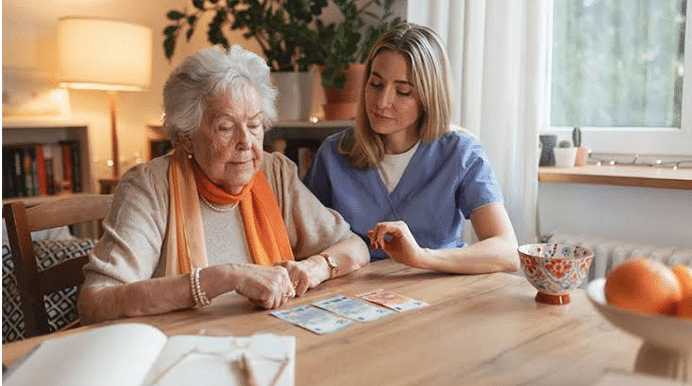
- Simple card games
- Word searches with large print
- Sorting coins or buttons by size or color
Choose activities that are appropriate for the person’s current abilities. If something becomes frustrating, switch to another activity.
8. Read Together
Reading does not have to mean sitting down and reading an entire book.
Consider:
- Looking through magazines
- Reading short stories
- Reading the newspaper together
- Looking through picture books
- Listening to audiobooks
- Reading poetry
Even when a senior has difficulty following a long story, they may still enjoy hearing a familiar voice or discussing pictures.
9. Create a Memory Box
A memory box can contain familiar objects connected to important moments in a person’s life.
Items might include:
- Family photographs
- Postcards
- Old greeting cards
- Favorite recipes
- Small keepsakes
- Fabric or craft items
- Souvenirs from meaningful places
Invite the senior to explore the items at their own pace. The goal is connection, not testing their memory.
10. Make Everyday Tasks Meaningful
One of the most overlooked activities for seniors with dementia is simply participating in everyday household routines.
Depending on their abilities, a senior may enjoy:
- Folding laundry
- Sorting socks
- Setting the table
- Organizing a drawer
- Wiping a table
- Watering plants
- Helping prepare a snack
These activities can provide a sense of contribution and independence.
Tips for Choosing Dementia-Friendly Activities
Every person with dementia is different. An activity that works well for one person may not interest another.
Keep these tips in mind:
Keep it familiar. Familiar activities often feel more comfortable than completely new ones.
Keep it simple. Break activities into small, manageable steps.
Avoid pressure. Participation should be encouraged, not forced.
Focus on abilities. Choose activities based on what the senior can comfortably do today.
Watch for frustration. If an activity becomes overwhelming, take a break or try something else.
Create a calm environment. Reduce unnecessary noise and distractions when possible.
Prioritize safety. Make sure activities and materials are appropriate for the senior’s mobility and cognitive abilities.
The Most Important Activity: Connection
For a senior living with dementia, an activity does not have to produce a finished project or accomplish a specific goal to be valuable.
Sometimes the most meaningful moments are simply sitting together, listening to music, looking through photographs, taking a walk, or sharing a familiar conversation.
The goal is to help seniors feel included, valued, and connected.
How In-Home Care Can Help
Families often want to provide meaningful activities for a loved one with dementia but may not have the time or support to do so consistently. A professional in-home caregiver can provide companionship and assistance with appropriate activities while helping seniors remain engaged in familiar surroundings.
At FirstLight Home Care of Melbourne, compassionate caregivers can provide personalized support designed around a senior’s individual needs, interests, routines, and abilities. If your loved one could benefit from companionship, assistance with daily activities, or additional support at home, contact FirstLight Home Care of Melbourne today at 321-221-7099 to learn how in-home care can help your family.