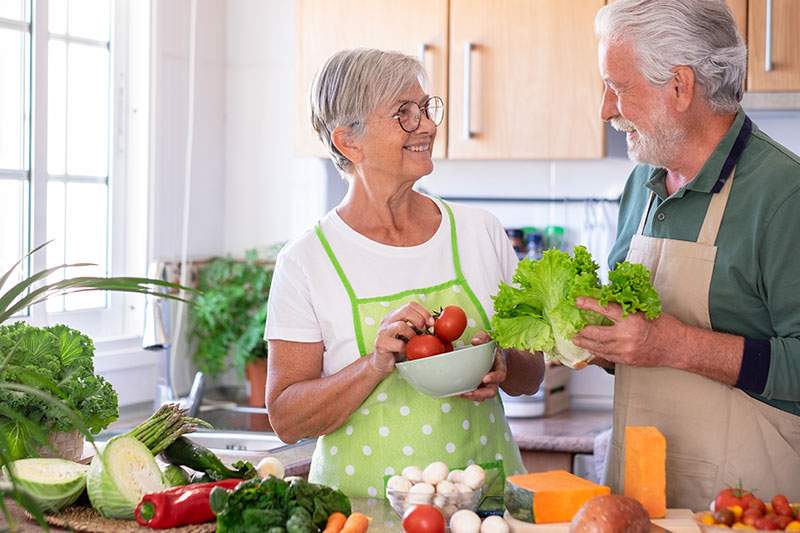
Healthy eating for seniors is an important part of overall health and well-being. Eating a well-balanced diet is crucial as we age. Proper nutrition provides the necessary vitamins, minerals and other nutrients, and helps maintain a healthy weight. Eating well can also lower the risk of developing chronic health conditions, such as heart disease and diabetes.
As we get older, our nutritional needs change. A slower metabolism means we need fewer calories. Chronic health issues and medications may mean we need more or less of certain vitamins. Our sense of smell and taste may diminish, leading to a loss of appetite.
Eating well as a senior citizen, or helping an older person eat more healthily, can be difficult if you don’t know where to begin. Here are six tips for getting the most out of your diet:
Knowing What to Eat Each Day
Learning what a healthy diet consists of is important knowledge to have. For most people, eating more vegetables and whole grains is a good place to start. But many people don’t get enough fiber in their diet, which is very important for overall health.
Limiting processed foods, which are often high in sugar, fat or salt but low in nutrients, is another way to improve a diet. The important thing to remember is that healthy eating consists of eating a balance of nutrient-rich foods from all categories. And, every diet has room for the occasional treat!
Eating the Proper Nutrients
When researching nutrition tips for seniors, keep in mind that aging means our bodies process foods differently than when we were younger. We need fewer daily calories, which means most people do not eat as much as their years advance, so our diets must pack more nutrients into less food.
Not to mention, chronic health issues like osteoporosis, Type 2 diabetes and high blood pressure mean we need to increase certain nutrients like calcium and vitamin D or decrease excess salt and sugar to maintain a healthy lifestyle.
Reading Nutrition Labels
At first glance, nutrition labels can be confusing. But paying attention to the information on nutrition labels will help guide you to the healthiest options for your diet. When looking at nutrition labels, remember:
- The number of calories listed is per serving, which may not be the whole package.
- Pay attention to the number of added sugars.
- The percentage of daily values for nutrients are based on the recommended nutritional information from the USDA. Five percent (5%) daily value or less of a nutrient is considered a low amount, while 20% or more is considered a high amount. Use these guidelines to determine if a food is low in nutrients or high in salt, sugar or fat.
- Nutrition labels are an easy way to compare different foods to find the best options.
Using Recommended Servings
Similar to understanding nutrition labels is understanding serving sizes and the recommended servings for a food. It’s easy to snack on chips, popcorn or candy without realizing the number of servings. Being mindful of serving sizes will help keep track of calories and nutrients.
Staying Hydrated
Drinking plenty of fluids is often something that older people have trouble with. But good hydration helps kidneys function properly, helps with cognitive function and generally helps our bodies work optimally.
Low sugar drinks, including iced tea or water with lemon or cucumber, work just as well as plain water. Additionally, eating water-heavy foods counts towards overall fluid intake, so enjoy watermelon, cucumbers and even soups for extra hydration.
Stretching Your Food Budget
Making the most of a food budget is important for those on a fixed income. Meal planning helps when grocery shopping because it limits randomly purchasing things that might go to waste. Shopping for bulk pantry staples can also mean less trips to the store and less impulse buying. Many grocery chains also have senior discount days when additional savings can be found.
Get Moving
While healthy eating for seniors is important, we shouldn’t forget about the importance of regular exercise. Getting into an exercise routine is crucial for active aging, so find senior health and fitness tips to fit any lifestyle.
FirstLight Home Care’s senior care services are available to help seniors navigate nutrition and exercise while aging. In-home caregivers can help with meal planning and prep, shopping and many more activities. For more information, contact us today!
 Home Care Services
 Home Care Jobs