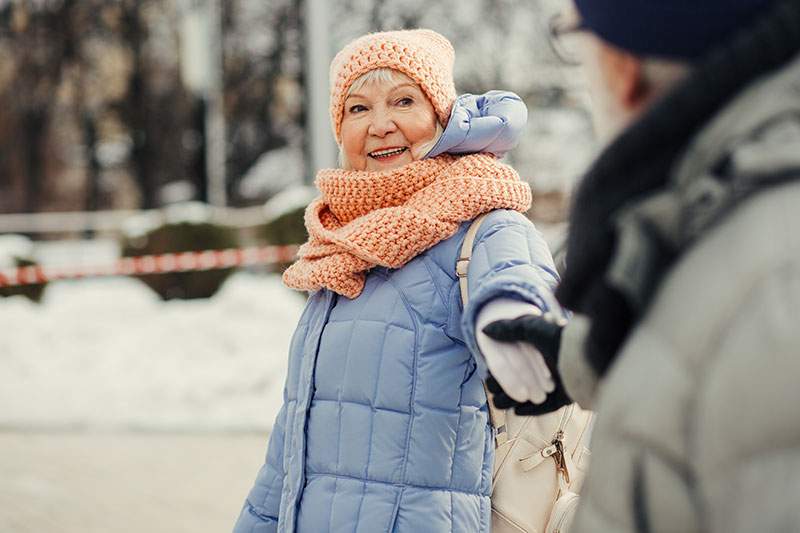
Well, it’s certain that winter is here and, in most states across the country, we have the weather to prove it! Along with freezing temps come snow and icy walkways, which can be extremely dangerous for our elderly friends and family members. Though falls can and do happen in the home as well, it’s important to be extra careful outdoors this time of year. Here are a few senior winter safety tips to put safety first preventing slips and falls in winter.
Risk Factors for Falls in the Elderly
Several factors can cause older adults to trip and fall, potentially hurting themselves, breaking a hip or suffering a traumatic brain injury at any time of year—and winter adds even more hazards. As we age, changes in muscle strength and balance combined with declining vision can contribute to stumbling. Falls can also be caused by dizziness, a side effect of some medications that seniors might be taking. The risk of falling can be exacerbated by any mobility issues, so extra precautions should be employed.
Common items in and around the home can also lead to a trip-and-fall incident. Throw rugs, cluttered floors and electrical cords extending into the walkways pose a threat for anyone walking by. Poor lighting, both inside and out, can also increase the chances of tripping. Taking care of these problems is the first step in making the home safer during any season.
Adding more lights or brighter bulbs is an easy way to boost safety by better illuminating walkways indoors and along sidewalks and driveways leading up to the house and garage, allowing outdoor tripping hazards to be spotted and avoided, especially in winter when it gets darker earlier.
Winter Safety Tips for Seniors at Home
Starting in the autumn—and continuing in winter months in some regions—it’s important to clear fallen leaves from porches and walkways because they can become slippery when wet. It’s also advised to keep salt inside the house so that you can sprinkle it on walkways when they become icy without having to risk a fall outside to get it. Make sure the sidewalk, driveway, front walk and front step are salted.
It’s also advised to take advantage of railings (and have some installed if needed) or a loved one’s elbow when offered as you traverse walkways around the home and beyond. This will also keep you more stable as you make your way up and down stairs. Don’t be afraid to ask for an elbow when it’s needed. Better to be safe than sorry!
When walking or moving around by yourself, slow down and take your time. Hurrying when leaving your home, getting on and off the bus, crossing the street or unloading your car can put you at risk of falling. Take your time and pay attention to steps, curbs, ramps and patches of ice.
And make sure footwear is suitable for winter weather. Check the traction and fit. Consider anti-slip overshoes or use non-slip treads on your existing shoes. Also, lined boots with good traction will keep you safe and warm.
To take it one step further, begin doing easy workouts to strengthen your legs and balancing exercises for seniors. Exercise is one of the most important things you can do for fall prevention—no matter the time of year. Simple moves done in the home, even from a sitting position, will help build muscle and keep you steadier so you don’t lose your balance.
Caregivers Can Help
If you’re feeling overwhelmed by safety concerns this winter and want to adopt a mindset of safety first preventing slips and falls in winter, a caregiver at FirstLight Home Care can help clients identify risk factors for tripping and falling around the home and suggest ways to fix these issues in addition to providing help with everyday needs like bathing, dressing, cooking, cleaning and driving to appointments as well as offering companionship—perhaps focusing on indoor activities for seniors that you can do together to stay safe inside during these winter months. To learn more, don’t hesitate to contact us.
 Home Care Services
 Home Care Jobs