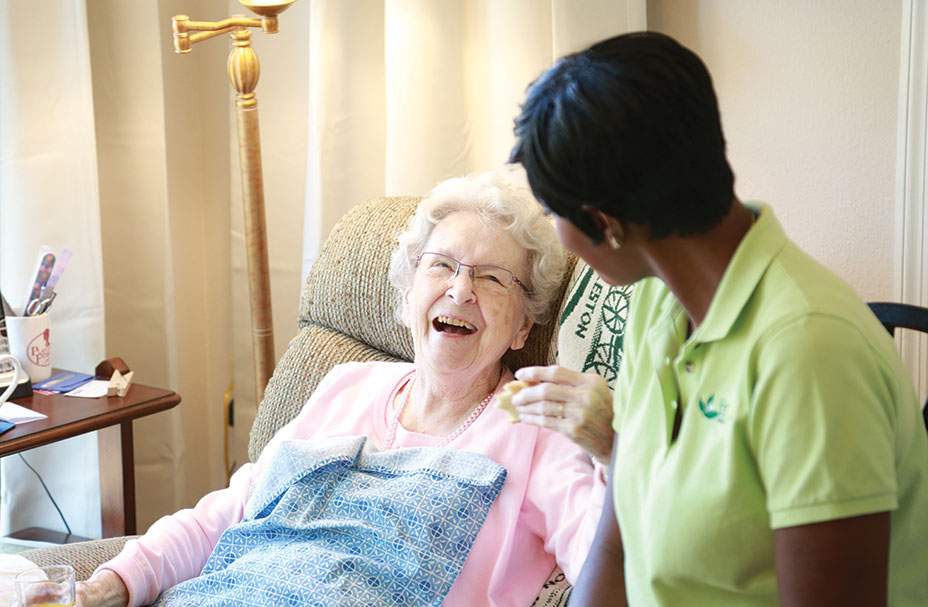

Whether your 3 or 83, listening can be hard.
As I write this, I know most people won’t read it. The same person who wants practical tips on organizing medications, avoiding falls, and taking care of a loved one with Alzheimer’s will likely skip over the most practical tip of all: Be a good listener.
Why? Because we all think we’re pretty good listeners. We know to sit patiently, try not to interrupt too much, nod at the appropriate times. The funny thing is most of us (and I include myself in this) aren’t great listeners even though we follow all the social rules of conversation.
Most of us “listen” by half hearing what someone is saying because we’re thinking of how we’re going to respond to it—a funny story that relates to what they’re saying, an argument with their point of view, an empty reassurance. We all do this. I do it with my husband when he talks about fantasy football (“That’s great!”) even though I have no idea what he’s said and with my kids when they’re whining about going to school (“Of course you want to go to school and see all your friends!”). We also do it with our aging loved ones.
Listening is a tough exercise on the easiest of days with our best friends who communicate just like us. It can be especially hard when you’re talking with (and listening to) someone with one of the many physical limitations that sometimes come with aging—hearing loss, stroke, or dementia. It also doesn’t help that quite often what you’re listening to is something you don’t want to hear or that contradicts a point you’re trying to make. (“I am perfectly fine living on my own.” “I can drive just fine.” “I don’t need anyone to take care of me.”)
I’m someone who can’t sit still for too long and I don’t always have patience for things that aren’t immediate. Working with seniors, I have to work really hard to squelch my natural urge to dive in, finish someone’s sentences, and not listen because I don’t want to miss something important. It can be so tempting to fill in the words for someone who has had a stroke or who has Parkinson’s and struggles to come up with words or formulate a sentence. But when I actually wait for the person to find the words, I’m often quite surprised by how different they are from what I thought they were going to.
Sometimes, the best thing you can do—one of the simplest things—is also the hardest: Sit down and listen to a loved one who is sick or aging. Our lives are busy. We stop by to check in, we drive to appointments and shop for groceries, but we rarely sit down and really listen. Next time you’re talking to Mom or Dad (or Gram or Auntie) make sure you’re listening to everything—not just what you expect or want them to say.
Even without a memory or speech disorder, it just might take us longer to put our thoughts together as we age. But when we don’t listen to our aging loved ones (or we finish their sentences), we enable them to stop trying and to stop being independent.
Molly Rowe owns FirstLight Home Care with her husband, Steve Rowe, and lives in Swampscott with their two sons. FirstLight provides non-medical in-home care to adults in Swampscott, Marblehead, Nahant, Lynn, Salem, Peabody, Danvers, Beverly, and Lynnfield. For more information and help caring for your loved ones in the comfort of their own homes, please visit FirstLight’s website at www.salem.firstlighthomecare.com or contact Molly at 781-691-5755/[email protected]
 Home Care Services
 Home Care Jobs