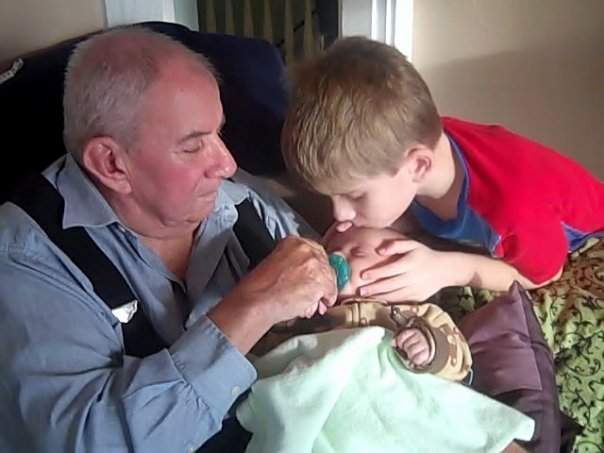
After my husband’s dad moved from Swampscott to Florida, we only saw him four times a year. I like to think we traded quick weekly breakfasts at Red’s Diner for long, quality weeks together by the pool. He got to know his Florida-based grandson like he never would have, and because we stayed with him, he got to wake up with our kids (who were both under the age of 4) and spend hours watching them splash in the pool and dismantle his house—hours and overnights he wouldn’t have had if he’d stayed here and we were in different houses.
Those visits were memorable and wonderful, but they were also tough, especially Day 1. Day 1 was when the “How’s Dad doing” assessment began. First, the reunion hug. How does he feel? Has he gained or lost weight? Does he wince in pain when we hug him? Do his clothes smell clean?
Then we’d move on to the home. Was it clean? Was there food in his refrigerator and snacks in the pantry? (Toward the end of my father-in-law’s life, we usually spent Day 1 cleaning his house, washing his clothes, filling his freezer with frozen meals, and discarding expired items.)
We’d secretly assess his mail. Were there any old bills or correspondence stacking up? (This was the one area that Dad never let slip, which probably enabled us to rationalize all the other areas in which he needed help.)
We’d look at medicines. Were they organized? Did it seem like he was taking them as prescribed? Were the expiration dates okay?
Last but not least, we’d assess our conversations and his overall mental state. Did he seem confused? Was he quieter than usual? Angrier? Sadder? Did he seem to have difficulty hearing us?
The “How’s Dad doing” assessment became more difficult with every visit. Toward the end of his life, the condition of almost every area was not good, and we realized too late that all of these assessments were signs he needed help.
If you have an aging loved one, it’s likely you’ll see more of them over the holidays than any other time of the year. Use this time not just to visit with them but also to assess how they’re doing in their current living situation. Ask yourself the same questions we asked, look at the same areas (personal hygiene, housekeeping, mail, medicines, mental state), and if your once-a-year holiday visit shows deterioration in ANY area, address it, because it will likely only get worse at the next visit.
It’s so much easier to open the conversation with your loved one early on when there are just one or two areas that need help. And, talking and getting help early will likely keep them safe and happy in their homes for a much longer period of time.
Molly Rowe owns FirstLight Home Care with her husband, Steve, and lives in Swampscott with their two sons. FirstLight provides non-medical in-home care to adults in Swampscott, Marblehead, Nahant, Lynn, Salem, Peabody, Danvers, Beverly, Lynnfield, and surrounding areas. For more resources and information, please visit FirstLight’s website at www.salem.firstlighthomecare.com or contact Molly at 781-691-5755/[email protected]
 Home Care Services
 Home Care Jobs