Choosing home care for a parent or loved one is rarely a simple checklist decision. Families are often trying to balance safety, independence, privacy, cost, personality fit, and the emotional weight of inviting someone new into the home.
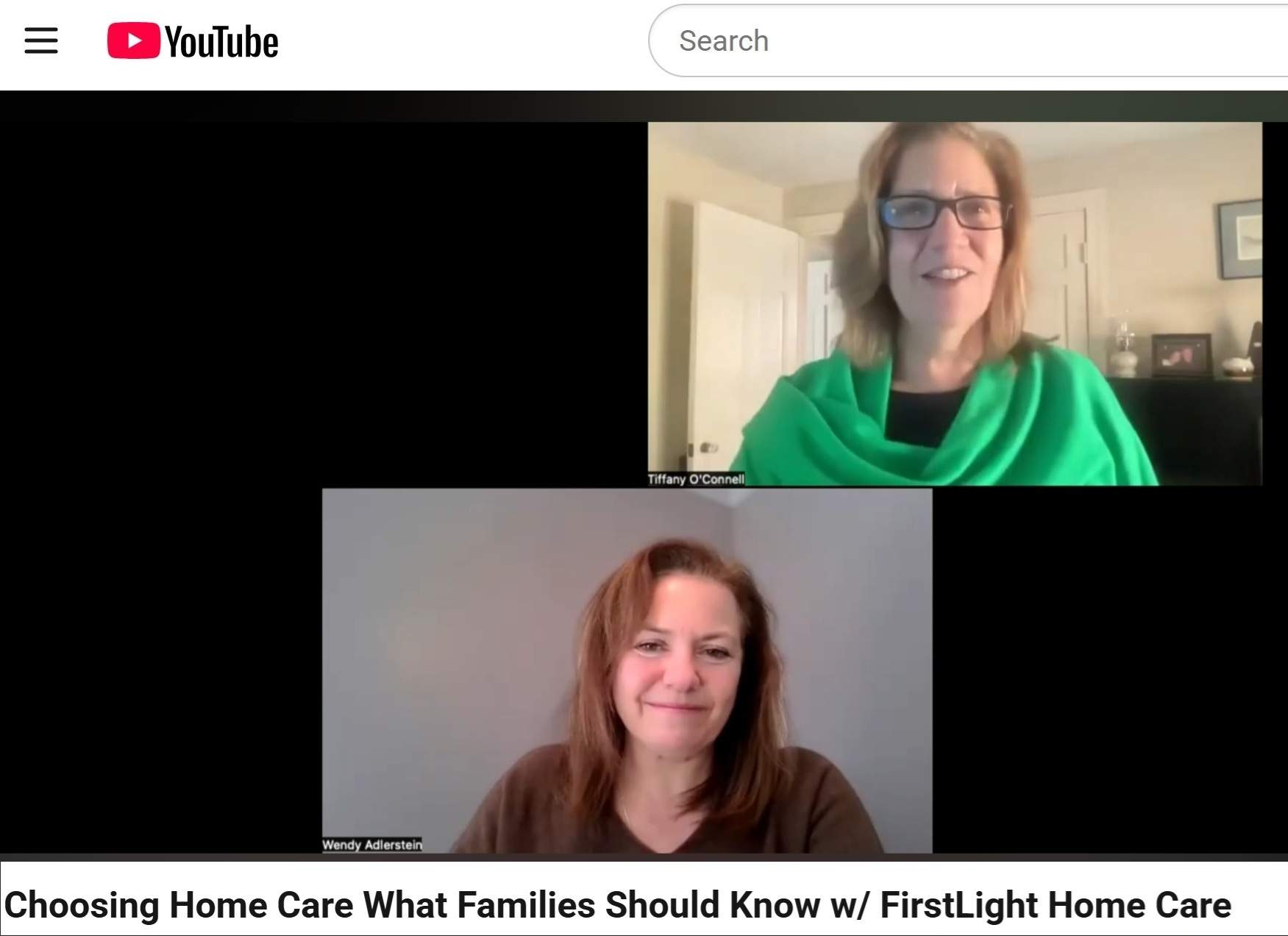
That is why Wendy Adlerstein, LSW, Co-Owner and Executive Director of FirstLight Home Care of West Suburban Boston, recently joined Attorney Tiff O’Connell of O’Connell Law LLC for a community webinar designed to help families understand what to look for before choosing home care.
During the webinar, part of O’Connell Law’s Lunch and Learn series, Wendy discussed what non-medical home care looks like in everyday life, how care plans are shaped around a person’s routines and preferences, and why caregiver screening, training, and agency oversight matter so much when families are comparing providers.
Key takeaways for families choosing home care:
- Start with the person’s real daily needs, routines, preferences, and safety concerns, not just a generic list of services.
- Ask every agency how caregivers are screened, trained, matched, supervised, and supported after care begins.
- Look for a care partner who communicates clearly with the family and can adjust the plan as needs change.
Why Choosing Home Care Can Feel So Overwhelming
Many families begin looking for care after something has changed: a fall, a hospital stay, a new diagnosis, growing forgetfulness, caregiver burnout, or a parent who is no longer keeping up with daily routines as easily as before.
In that moment, the question is not just, “Can someone come help?” It is, “Who can we trust in the home, and how do we know this is the right kind of help?”
Non-medical home care can support everyday life in practical ways. Depending on the person’s needs, that may include companionship, meal preparation, light housekeeping, mobility support, personal care, respite for family caregivers, transportation support, or help maintaining a safe routine at home. It is different from skilled nursing or medical treatment, which is an important distinction for families to understand early.
For a deeper look at available support, FirstLight’s home care services page outlines the types of non-medical care families often consider.
Start With the Person, Not the Schedule
A strong care plan begins with listening. Before a family decides how many hours of care may be needed, it helps to understand what is actually happening day to day.
Is your parent skipping meals because cooking feels like too much? Are they steady in the morning but less safe at night? Are they lonely, anxious, resistant to help, or worried about losing independence? Is the family caregiver exhausted but unsure how to step back?
Those details matter because good home care is not only about filling time. It is about building support around the person’s routines, personality, dignity, and comfort level. A thoughtful agency should ask about the home, the family dynamics, the person’s preferences, the safety concerns, and what kind of help may feel acceptable as a first step.
Questions to Ask Before Choosing a Home Care Agency
Families should feel comfortable asking direct questions. The right provider will welcome them.
- How do you screen and hire caregivers?
- What kind of training do caregivers receive before and after they begin working with clients?
- How do you match a caregiver with a client?
- Who supervises the care plan after services begin?
- How does the family receive updates?
- What happens if a caregiver is sick, unavailable, or not the right fit?
- How do you adjust the care plan if needs change?
- What is included in the hourly rate or care arrangement?
These questions help families look beyond availability alone. A good fit includes trust, communication, consistency, and a clear plan for what happens after the first caregiver arrives.
Why Caregiver Screening and Oversight Matter
When a caregiver enters the home, families are placing a high level of trust in that person and in the agency behind them. That is why caregiver screening, training, and supervision are central to the decision.
During the webinar, Wendy addressed the importance of proper caregiver screening, training, and agency oversight. For families, this is one of the most practical areas to compare. Ask how the agency evaluates caregivers, how it prepares them for different needs, and how it stays involved once care is underway.
Oversight matters because care needs can change. A parent may need more help after a setback, less help after recovery, or a different caregiver match as routines become clearer. Families should know who to call, who is responsible for the plan, and how concerns are handled.
FirstLight’s Why Us page explains more about the local team’s approach to caregiver quality, care coordination, and family communication.
Think About Fit, Not Just Tasks
Home care is personal. Two caregivers may be able to help with the same tasks, but the right match can make the difference between resistance and acceptance.
Some clients want quiet support. Others enjoy conversation. Some need a caregiver who is comfortable with memory loss, mobility challenges, personal care, or a very specific household routine. Some families need respite because a spouse or adult child has been carrying the responsibility for a long time.
That is why the matching process should include more than a list of duties. Families should ask how the agency learns about personality, preferences, communication style, and the kind of relationship that will make care feel less intrusive.
Understand Cost and Coverage Early
Cost is a practical part of choosing home care, and families should ask about it early. Non-medical home care is often private pay, though some families may have long-term care insurance or other resources that help with the cost.
It is also important to distinguish non-medical home care from Medicare-covered home health services. Home care can help with daily routines, companionship, personal care, meal preparation, supervision, and respite, but it is not skilled nursing or medical treatment.
FirstLight’s pricing page explains how schedules, shift length, care needs, and the structure of support can affect cost.
When Memory Loss or Dementia Is Part of the Decision
If a loved one is living with Alzheimer’s disease, dementia, or noticeable memory changes, the questions become even more specific. Families may need help with routine, redirection, supervision, safety, meals, personal care, and respite for the family caregiver.
In those situations, it is worth asking whether caregivers receive dementia-related training and how the agency supports families when needs change over time. The goal is not only to complete tasks, but to help the person feel respected, understood, and as comfortable as possible at home.
Families can learn more about FirstLight’s approach on the dementia care page.
Watch the Full Webinar
The full webinar is a helpful starting point for families who are beginning to compare options or trying to understand what non-medical home care may look like in practice.
Watch Wendy Adlerstein’s full webinar conversation with Attorney Tiff O’Connell.
If your family is beginning to ask whether help at home may be needed, FirstLight Home Care of West Suburban Boston can talk through the situation, answer questions, and help you think through next steps. Contact the local team or request pricing to start with a practical conversation.
