When a loved one is living with Alzheimer’s disease or another form of dementia, families often look for more than help with daily tasks. They want to know that the person coming into the home understands how to communicate with patience, protect dignity, notice changes, and support routines that still feel familiar.
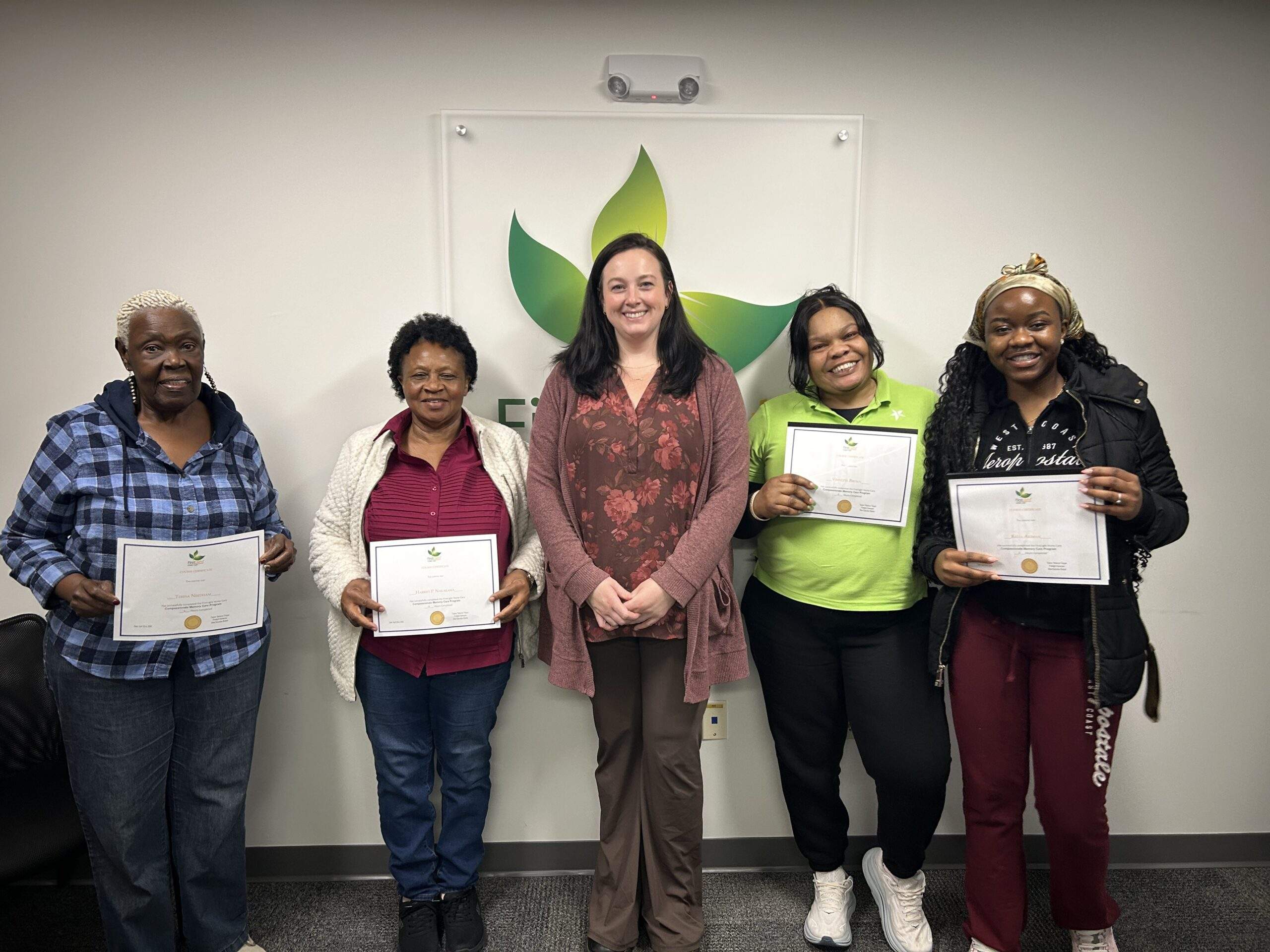
At FirstLight Home Care of West Suburban Boston, that kind of care starts with training. Our newest cohort of trainees recently completed the Compassionate Memory Care Program, an award-winning initiative designed to help caregivers support individuals living with Alzheimer’s disease and other forms of dementia with greater confidence, empathy, and skill.
Key takeaways for families:
- Dementia care works best when caregivers understand the person’s routines, preferences, abilities, and life story.
- Training helps caregivers adapt communication and daily support as memory, mood, or safety needs change.
- For families, a well-supported caregiver can bring more consistency, reassurance, and peace of mind at home.
Why Dementia Care Training Matters
Dementia can change how a person experiences the day. A routine that used to feel simple may become confusing. A familiar task may take longer. A conversation may need more time, more patience, or a different approach than it once did.
For family members, those changes can be emotional and exhausting. Adult children may be trying to protect a parent’s independence while also worrying about safety. Spouses may be carrying more of the day-to-day support than they can reasonably sustain alone. Everyone may be trying to make the right decision without making their loved one feel managed or diminished.
That is why training matters. Good dementia care is not one-size-fits-all. It requires caregivers to slow down, observe carefully, communicate respectfully, and adapt support around the person in front of them.
A Person-Centered Approach to Memory Care
The Compassionate Memory Care Program helps strengthen our person-centered approach by encouraging caregivers to focus on each client’s unique life story, preferences, abilities, and routines. Rather than treating dementia care as a checklist, the training reinforces the importance of understanding what helps a person feel calm, respected, and safe at home.
That may mean learning how someone prefers to start the morning, what kinds of conversation feel reassuring, which activities still bring comfort, or how to offer help without taking over. Small details can matter. In dementia care, the way support is offered can be just as important as the task itself.
This kind of individualized support is central to our mission. It is one of the ways we help older adults continue living with dignity, comfort, and confidence at home while giving families a steadier path through a difficult stage of care.
What Families Should Look For in Dementia Support
When families begin comparing home care options, it can be hard to know what questions to ask. Training is a useful place to start, but it should be part of a larger care model that includes communication, caregiver matching, supervision, and ongoing support.
- Ask how caregivers are prepared to support clients with Alzheimer’s disease or dementia.
- Ask how the agency learns about the client’s routines, personality, preferences, and family concerns.
- Ask how caregiver fit is handled, especially if a loved one may resist help at first.
- Ask who the family communicates with when needs change or concerns come up.
- Ask how the care plan is updated as memory, safety, or daily support needs evolve.
These questions help families see whether an agency is simply filling hours or truly coordinating care around the person. For dementia care especially, that difference matters.
Training Supports Families, Not Just Caregivers
What makes this training especially meaningful is the way it supports the families we serve. Dementia can bring uncertainty and stress, and family members often wonder whether they are stepping in too soon, too late, or in the wrong way.
A trained caregiver can help create more stability in the home. They can support daily routines, assist with personal care or companionship, offer reminders, reduce avoidable frustration, and share observations with the care team. Just as important, they can help family members feel less alone in the day-to-day work of care.
At FirstLight Home Care of West Suburban Boston, dementia care is also connected to a broader care model. Families are supported by a local office team, care coordinators, and leaders who understand how personal this decision is. Wendy Adlerstein, LSW, Executive Director and Co-Owner, brings deep elder-services experience to the way our team thinks about assessment, care planning, family communication, and dementia-related support.
Caregiver Quality Is Built Over Time
Completing the Compassionate Memory Care Program is one visible example of a larger commitment: caregiver quality is not a single moment. It is built through careful hiring, training, communication, field support, and the willingness to keep learning.
Our newest cohort of trainees reflects that commitment. We are proud to celebrate their achievement and their dedication to growing as professionals. Their work matters because families are trusting us with people they love, often at a moment when home life has become more complicated and emotionally charged.
For families who want to understand how FirstLight approaches caregiver quality, matching, coordination, and accountability, our Why Us page explains more about the local care model behind the service.
When It May Be Time to Talk About Dementia Care
Families do not need to wait until everything feels urgent before asking questions. A conversation can be useful when a loved one is becoming less steady with routines, showing signs of confusion, resisting help, becoming more isolated, or requiring more supervision than family members can safely provide on their own.
The first step does not have to be a full care schedule. Sometimes it begins with understanding what kind of support may help, what the family is worried about, and what kind of caregiver relationship the person may be most likely to accept.
If your family is navigating dementia, memory loss, or changing safety needs at home, FirstLight Home Care of West Suburban Boston can talk through the situation with you. Contact the local team to start with a practical conversation about what support could look like.
 Home Care Services
 Home Care Jobs