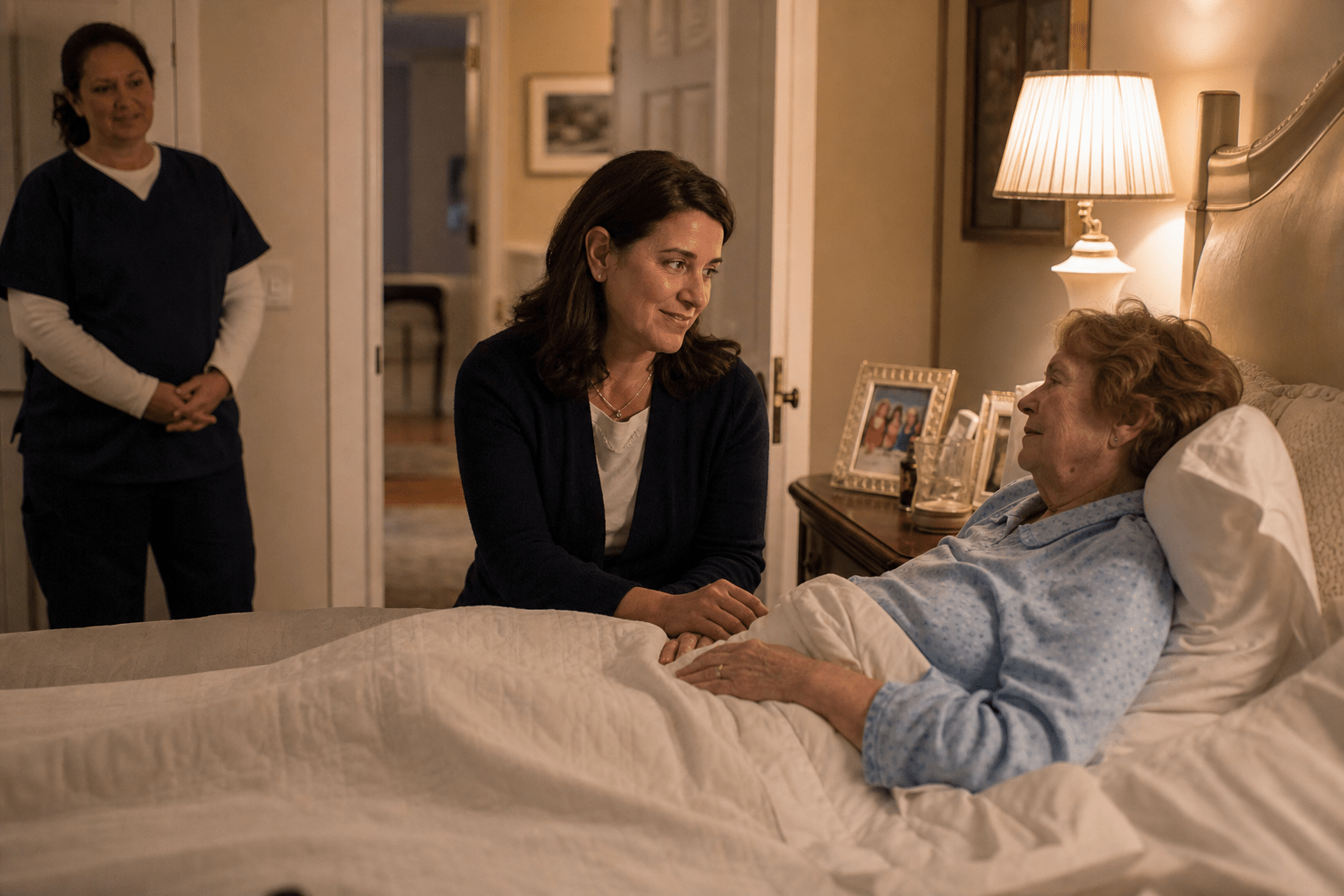
When families in Needham, Newton, Wellesley, Weston, Wayland, Milton, and downtown Boston neighborhoods like the Back Bay and Seaport begin exploring non-medical home care, they are usually looking for more than a list of services. They want reliability, clear communication, and a care partner who can respond when needs change.
At FirstLight Home Care of West Suburban Boston, care is overseen by Wendy Adlerstein, LSW, Executive Director and Co-Owner, whose social work background helps shape the agency’s care coordination model and family-first approach.
That matters because home care works best when it is coordinated, not improvised. A caregiver in the home is important, but so is the system behind that caregiver: the assessment, the plan, the follow-up, the schedule management, and the communication that keeps everything aligned. FirstLight’s West Suburban Boston office describes a care coordination team that oversees caregivers to help ensure the care delivered matches the care plan, with 24/7 support available for urgent issues and scheduling needs.
A social-worker-led model adds another layer of value. Social workers are trained to look at the whole situation, not just the task list, considering family stress, safety, routines, emotional needs, transitions, and the practical realities of aging at home. In home care, that perspective helps families move from uncertainty to a plan they can trust.
FirstLight Home Care of West Suburban Boston serves families throughout the western suburbs of Boston and into select downtown neighborhoods, including the Back Bay and Seaport. That local reach matters because home care is often about proximity, responsiveness, and understanding the rhythms of the community. Whether a family is in Newton or Needham, Weston or Wayland, Wellesley or Milton, or right in Boston, they need a provider that can coordinate care with consistency and local awareness.
For many families, the biggest benefit is peace of mind. Instead of having to manage every detail themselves, they have a local team that knows the client, understands the plan, and can help adjust services as needs change. That becomes especially valuable after a hospitalization, during memory loss, when a spouse caregiver is burned out, or when a family member lives far away and cannot monitor day-to-day care in person.
Another important benefit is caregiver matching. Families often assume home care quality depends only on experience, but consistency and fit matter just as much. FirstLight has positioned its model around thoughtful caregiver matching, staff oversight, and communication that keeps the plan updated as circumstances change. When a match is stronger, the care feels more comfortable, more personal, and more sustainable for everyone involved.
This model also helps families understand what they are really buying. Private home care is not just time in the home; it includes coordination, training, backup planning, office support, quality oversight, and accountability. That distinction is important for families comparing agencies or comparing agency care to private-hire arrangements. When the office is actively involved, families are less likely to be left handling schedules, substitutions, or concerns on their own.
For referral sources, the value is equally clear. Hospital discharge planners, elder law professionals, geriatric care managers, and other referral partners need confidence that the agency can communicate well and follow through after the referral is made. A social-worker-led model signals that the agency understands transitions, family dynamics, and the need for steady coordination rather than a one-time placement.
At FirstLight Home Care of West Suburban Boston, that coordination is not abstract. The agency’s own materials describe care coordination, caregiver oversight, in-home assessment, training, and 24/7 on-call support as part of the service model. Wendy Adlerstein, LSW, Executive Director and Co-Owner, brings clinical judgment and long-standing experience in elder care to that work, helping guide the agency’s emphasis on person-centered care and family communication.
The goal is simple: make home care feel less fragmented and more dependable. Families should not have to wonder who is keeping track of the details or whether the plan is still the right one. With a social-worker-led care coordination model, the answer is a team that is actively watching, adjusting, and supporting the family through each stage of care.
FAQ
What is care coordination in home care?
Care coordination is the process of matching the care plan, the caregiver, the schedule, and the family’s changing needs so the service stays organized and responsive.
Why does it matter that Wendy Adlerstein, LSW oversees care?
Because a licensed social worker brings training in family systems, aging, communication, and practical problem-solving, which strengthens assessment, planning, and ongoing oversight.
How is this different from hiring a caregiver privately?
With an agency model, families also receive oversight, backup planning, training, coordination, and office support rather than having to manage all of that themselves.
What happens if a caregiver is unavailable?
FirstLight’s West Suburban Boston office describes 24/7 support for urgent issues and scheduling needs, which helps the agency respond when changes happen unexpectedly.
What areas does FirstLight Home Care of West Suburban Boston serve?
The agency serves Needham, Newton, Wellesley, Weston, Wayland, Milton, and surrounding western suburbs, along with downtown Boston neighborhoods including the Back Bay and Seaport.
How does care coordination help families emotionally?
It reduces the feeling that one family member has to hold everything together. The office becomes a support system for communication, planning, and follow-through.
Who should consider this type of care?
Families dealing with aging in place, dementia, recovery after hospitalization, caregiver burnout, or increasing safety concerns often benefit most from a coordinated model.
Does this replace medical care?
No. This is non-medical home care. It supports daily living, companionship, routines, and supervision, while skilled clinical services remain separate.
Would you like me to turn this into a slightly more polished, publication-style version with a stronger opening hook and smoother transitions between sections?
How do I contact the agency to arrange care?
For a free consultation and assessment, please call FirstLight Home Care of West Suburban Boston at 1-781-559-0220.
 Home Care Services
 Home Care Jobs